19.09c
Երեվան
երք, սպտ 01



Copy writer, feature writer & freelance journalist
Birmingham, United Kingdom
Three days ago I spotted a social media campaign, which highlights the various refugee stories behind some celebrities’ lives. On the promotional video, we see the likes of Jamie Cullum telling about their families having been forced to flee from persecution. We can safely assume that the campaign aims to shape public perception of the current wave of refugees and draw support to the charity behind it (more on http://www.helprefugees.org.uk/refugenes).
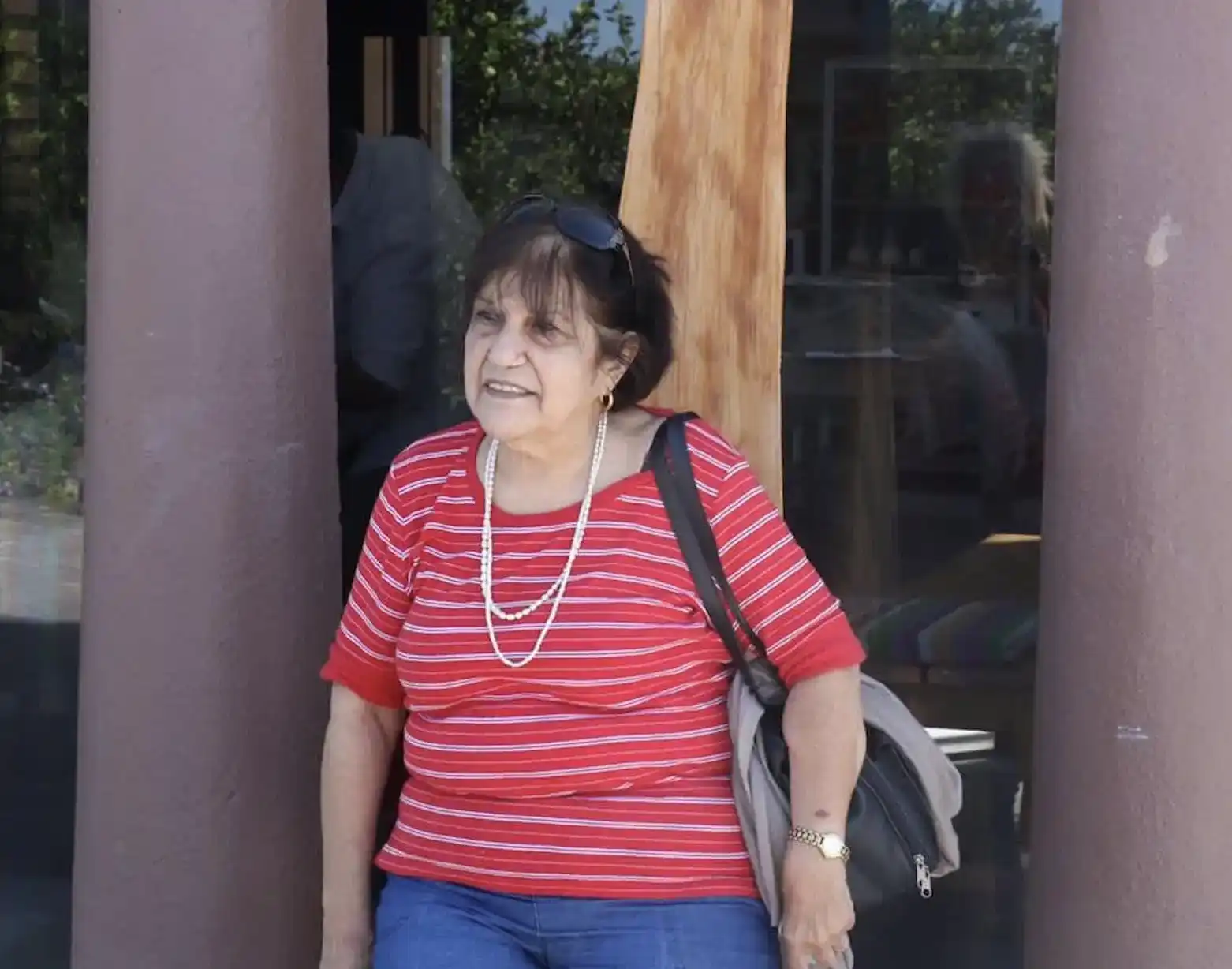
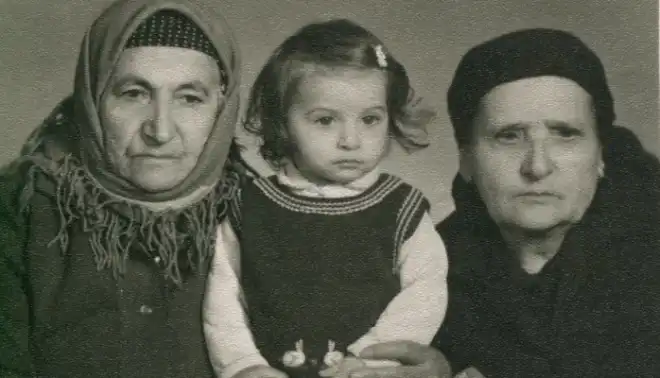
This reminded me of my own refugenes. My great grandma (on the right in the above picture) fled to Armenia from Turkey with her mother in early 20th century. She was the only one of the 7 children to survive the humiliating and harrowing journey. This is the story of the first genocide of the 20th century, the forgotten one.
Last year Armenians around the world commemorated the 100th anniversary of the Genocide. Definitions of genocide, including one adopted by the UN, talk of harm to, persecution and killing of a religious, ethnic or racial group with the intent to destroy and annihilate it.
April 24th 1915 is a date in the Armenian calendar which is forever marked in black. On what is now Armenian Genocide Remembrance Day, in fact it was night-time over a hundred years ago, roughly 250 Armenian intellectuals, such as prominent doctors, authors, and members of parliament in the Ottoman capital Constantinople, now Istanbul, were taken away under the cover of darkness. (More on http://www.genocide-museum.am/eng/index.php)
Detained, tortured, killed, in the following weeks up to 2500 community leaders were taken out in what historians described as ‘decapitation’.
Lying on the fault lines between warring empires, Armenia was centuries ago divided into Eastern and Western halves. At the end of the 19th century Eastern Armenia was a province within Tsarist Russia, subsequently in the USSR and now independent. Whereas my ancestral homeland, Western Armenia, today referred to as Eastern Turkey, was part of the Ottoman Empire. Think of the island of Ireland divided between the British and say, French empires. Western Armenians were a headache for the Ottoman government: wanting more autonomy, including religious freedom for its over-taxed and overwhelmingly Christian population.
Between 1890s and 1923, the Ottoman government, systematically carried out its plans to exterminate the Armenians in its territory. Pregnant women’s bellies were cut open, babies taken out and killed. Able-bodied men were rounded up, disarmed and killed, children and the elderly marched across the Syrian Desert - Ottoman territory then - without food or water, and many women taken into slavery to give births to future Turks. Heads cut with axes were thrown into rivers Euphrates and Tigris. The operation nearly wiped out Ottoman Armenians. By numerous accounts, between 1 million and 1.5 million people perished. Today, closet Armenians who had to convert to Islam to survive can be found in what are Kurdish-populated areas in Turkey and human bones scattered in Syrian sands.
The massacres were documented through people such as American ambassador Henry Morgenthau, novelist Franz Weller, Nobel Peace Prize Laureate Fridtjof Nansen, US Presidents Theodor Roosevelt and Woodrow Wilson. The Armenian Diaspora is another witness and consequence. Over 10 million Armenians live outside of Armenia, spread across the world, as opposed to the 3 million in Armenia. They are descendants of those who fled, for example, on French ships through the Mediterranean and from then on to the US or Egypt. They were greatly helped by Christian missionary organisations in particular.
As of today, 28 countries, including Brazil, Canada, France, Germany, Italy and Russia, as well as 45 states out of 50 of the United States of America, recognize the events as a genocide. But every year the US presidents fall short of using that word in their annual April 24 statement, preferring terms like ‘mass atrocity’. The Turkish state denies the genocide, noting that killings on both sides took place during the World War, although civil society, and high profile authors, such as Nobel Prize Laureate Orhan Pamuk have risked imprisonment by opening up a conversation on what Elif Shafak termed ‘collective amnesia’. Imagine Germans saying ‘’Holocaust? What Holocaust?’’ I have a feeling we as a nation have come to terms with having lost part of our homeland, but an apology would be nice, and an opportunity to hold a mass vigil or burial of nameless, graveless human remains – desirable.
Why recall these gruesome events? I want to say so that they are never repeated, but we all know about the Rwandan Genocide in 1994 or the Bosnian one in 1995. Moreover, it seems that scientific and technological progress helped create more advanced ways of killing, as evidenced by gas chambers. It is widely known that Hitler, while planning his atrocities, remarked, ‘’Who, after all, speaks today of the annihilation of the Armenians?’’
So remembering may not prevent it from happening again. And yet it is only human response possible. Many citizens of today’s Armenia, myself included, and many more Armenians born and raised in the West, descended from survivors, would tell you we are a proud lot, as we overcame the drive to exterminate us, spread our wings far and wide and are still going, with our own flag, an anthem, a distinct language and religion. And what makes a nation is the shared collective memory of journeys of struggle and survival.
To forget would be to betray ourselves, to deny history and to sink into oblivion the lives of our forefathers, or sisters and brothers. To stay silent would be to relinquish our identity. Because memory is identity. And what are we without it?
People are alive as long as they are remembered by those who loved them. My great-grandma was a 4-year-old in 1914, getting on the train to Russia after days of walking with her siblings and parents. Her mother had family gold and silver, and to buy mercy of the guards or buy bread from passers-by, antique belts were sacrificed. All other children contracted disease or died of starvation or exhaustion. She made a new life in Eastern Armenia, where she forever spoke a different dialect of Armenian to the one we spoke. She had three children, seven grandchildren and thirteen great-grandchildren.
(PHOTO CREDITS: Great-grandmothers on either side of author; Campaign poster for #Refugenes by Help Refugees UK)